USD Currency Index & Volatility
Post on: 16 Март, 2015 No Comment
Relative Currency Strength
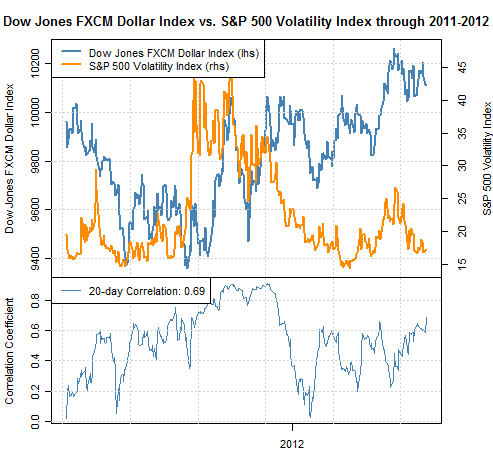
During the past trading week there were several events that notably influenced the observed currencies. The Euro became the worst performer, as its index finished the period with more than a 1.5% loss. Such result was greatly influenced by the ECB bond buying actions on Thursday. The most successful was the Swedish krona, whose index gained almost 1% after the Swedish GDP turned out to be much better than predicted. The Loonie was another currency to be greatly influenced by one major economic event, as its index surged to the 100.5 points level on Tuesday, against the background of the BoC governor’s Poloz comments, and remained on this level till the end of the week.
The dollar’s Currency Index started the period with a slight upturn, but then went into a steady depreciation against the background of Fed’s Chair two-day testimony. The index managed to turn around on Thursday, helped by unexpectedly high durable goods orders and the weakening Euro. As a result, during the day the Greenback gained 1.4% against the single currency, and its index went from bottom-three to top-five. Ultimately, the dollar finished the period in the middle, posting equal number of gains and losses against its peers.
Volatility
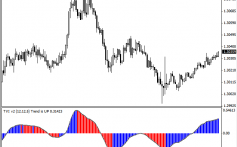
The activity on the market and among the dollar’s pairs has somewhat risen from the readings of the two previous weeks, though the latest level of volatility still remained low compared to the usual. The dollar’s volatility spent 10% of time above its historical level. The market portion of elevated volatility, in turn, was 12%. The period was quite turbulent for the Canadian dollar, as the Loonie showed the highest spike of volatility. The BoC governor’s Poloz speech on Tuesday pushed the index to spike to the 3.25 mark, causing the market’s measure to rise to its highest peak as well.
The main volatility-driving event of the period took place on Tuesday. The Fed’s Chair’s Yellen testimony before the Senate Banking Committee pushed the dollar’s index to the maximum level of the period, 2.0 points. The market index followed the Greenback’s gauge, though only managed to climb to the 1.3 mark. The next surge of the volatility occurred on Thursday and was caused by a bunch of US fundamentals. Nevertheless, the index only reached 1.39 points. On Friday, US data reports the last rise of the USD volatility, with the maximum peak of the day reaching the 1.27 mark.
Currency Significance
The dollar’s significance measure held firmly between the 0.35 and 0.45 points marks, thus standing close to its moderately strong long-term readings. Its components showed the same pattern of grouping around the averages, which, in turn, stayed mostly unchanged from the previous period. The only combination to shift notably higher was USD/EUR-USD/SEK, which lifted its average correlation 0.05-0.1 points above the long-term levels. Compared to its peers, the dollar’s composite showed below-average results, still remaining well below the top performing measures.
The composite was relatively stable, having only one major deviation from the period’s average, and finishing the week unchanged from how it began. It spent the first day and a half fluctuating around the 0.35 mark, and then crossed above 0.40 on Tuesday afternoon, as the dollar reacted to consumer confidence release and Janet Yellen’s testimony. The measure started to ease from its higher level on early Thursday, but was sharply pushed up by the day’s fundamentals that offered support to the Greenback. The surge brought the composite to the period’s maximum and the only point in which it stood above all its peers. The next day, a spike in the krona’s significance drove the dollar’s measure back to 0.35 points, effectively erasing all the period’s gains.