Understanding the Income Statement_2
Post on: 16 Март, 2015 No Comment
Originally Published: April 2010
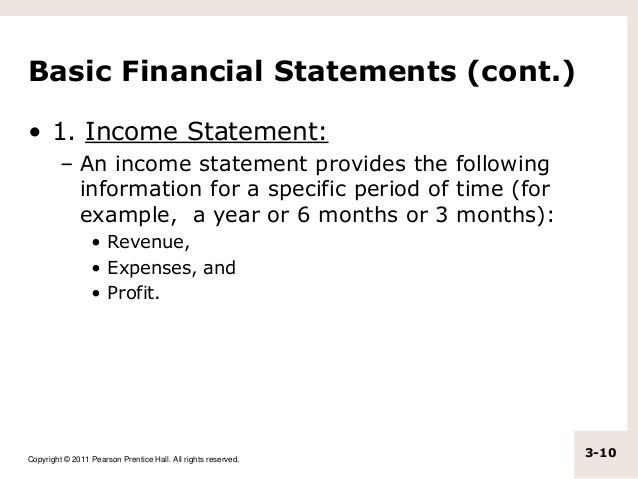
The Income Statement also referred to as the operating statement, profit and loss statement (P&L), earnings statement, or statement of operations provides a summary of a companys profit or loss during a specific time period. Together with the Balance Sheet, which provides information at a specific point in time, it is an important tool for vendors in determining the health of an organization.
Components of the Income Statement: What They Tell Us
Sales or Revenues (Net Sales on the sample): Often called the top line, it represents the amount the company sold during the period.
Note #1: Looking at LLHs Income Statement, you can see that the corporations Net Sales have increased more than 34% since 2007.
Cost of Goods Sold (Cost of Sales on the sample): The amount it costs to make or procure the products or services an organization sells. For manufacturing firms this includes the direct cost of raw materials, labor, and manufacturing overhead to make the product. For wholesalers and retailers, it is the purchase cost of the merchandise sold. For service companies, it’s the direct costs involved in providing the service.
Note #2: While LLHs Net Sales increased 34% in 2009 over 2007, their Cost of Sales grew just 29%. Thus, Sales outstripped Costs over that 3-year period.
Gross Margin (Gross Profit on the sample; also could be Gross Loss): This represents Net Sales minus Cost of Goods Sold. Its important to look at this number over time, as a trend. If there is an increase in sales, with a drop in the gross margin to sales ratio, it’s an indication the company is growing weak on the top line and may be in jeopardy.
Note #3: As can be seen on LLHs Income Statement there has been a very healthy increase in Gross Margin of 44% between 2007 and 2009. Therefore, in this case the top line (Net Sales) appears to be strong.
Selling, General and Administrative Expenses (SG&A): Often called overhead or fixed costs, these represent the organizations operational expenses not directly related to making or procuring their products/services. For instance: salaries, commissions, marketing costs, utilities, insurance, office supplies, etc. The goal is to keep these expenses as low as possible. The trend of these expenses as a percentage of sales should be watched closely to detect signs of managerial inefficiency.
Note #4: In LLHs case, the trend of these general expenses as a percentage of sales is generally holding steady
- 2007: General Expenses = 29% of Net Sales
- 2008: General Expenses = 27% of Net Sales
- 2009: General Expenses = 28% of Net Sales
Operating Income: Gross Profits minus SG&A. The companys earnings from its normal operations, before interest, non-operating income and costs, taxes, etc. Operating income is viewed by some analysts as more reliable than net income as a measure of profitability.
Note #5: LLHs Operating Income grew 132% from 2007 to 2009.
Interest Expense: The costs of the companys credit lines and other borrowings.
Note #6: Interest expense showed a significant decrease from 2007 ($722,000) to 2009 (2,000).
Other (Income) Expense: Items not related to the primary business activities of the company, for instance income from subletting space, patents, unusual or infrequent gains and losses.
Income Before Income Taxes or Pretax Income: This is exactly what the name describes. As there are many ways to avoid or decrease income tax expense, some analysts consider this pretax income as an accurate measure of the companys profitability.
Note #7: Income Before Taxes has shown increases:
- 2007 to 2008: 104%
- 2008 to 2009: 17%
Provision for Income Taxes: What the organization expects to have to pay in income taxes for the period.
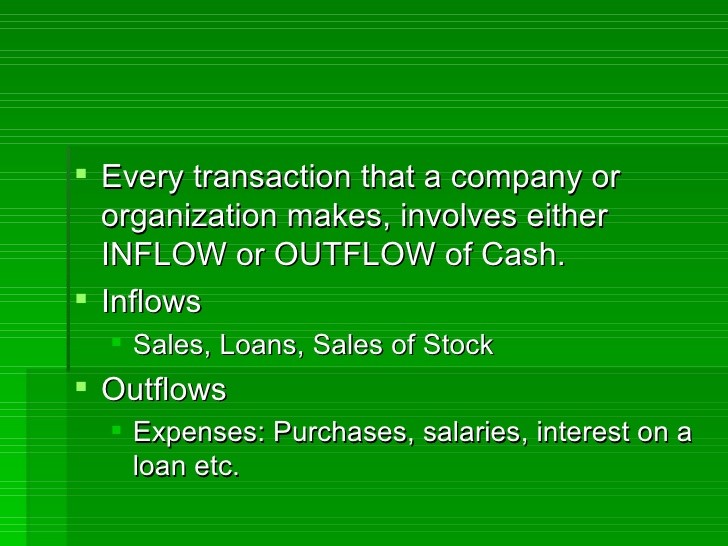
Net Income: Called the bottom line because it actually is the last line of the statement. This is the profit (or loss) for the period covered by the Income Statement. Obviously, you want to see a positive number here; the higher, the better.
Note #8: LLHs Net Income increased 96% 2007 to 2008 and 22% 2008 to 2009. Overall, there was a 138% increase in Net Income from 2007 to 2009.
Earnings per Share (EPS) (Net Income per Common Share Basic: and Diluted on the sample): Earnings per share are required to be disclosed on the Income Statement. Basic is a weighted average of shares outstanding and includes only stocks outstanding. Diluted is also a weighted average, but is calculated as if all stock options, warrants, convertible bonds and other securities that could be transformed into shares have been. Diluted earnings per share is considered the most reliable way to measure EPS.
Conclusions from Reviewing Data in the Income Statement
Overall, LLH Inc. has shown a tremendous improvement from 2007 through 2009 in all areas:
- Net Sales up 34%
- Gross Margin up 44%
- Operating Income up 132%
- Interest Expenses down more than 99%
- Net Income up 138%
The majority of the improvement occurred between 2007 and 2008. However, considering the state of the U.S. economy in 2009, it looks like LLH is weathering the recession well.
While a credit decision should never be made looking at one financial statement alone, the numbers in LLHs Income Statement certainly show a very positive trend.
Some Limitations of the Income Statement
Before going further, it should be noted that there are some limitations to the information found on the Income Statement:
- Only items that can be measured with accuracy are included. Some items not included are: unrealized gains or losses on investments or increases in a companys value due to branding, quality and loyalty.
- Some numbers depend on the accounting method utilized (e.g. FIFO or LIFO to measure inventory levels).
- Depreciation methods, accelerated or straight line, can have a major impact on net income.
- Subjective judgments, in particular as related to useful life and salvage value, can significantly increase (or decrease) net income.
Using the Income Statement to Determine the Financial Health of a Business
Ratio analysis is the primary means of determining the overall financial condition of a potential customer. However, ratios are most valuable when you obtain them for multiple years to establish a trend, or obtain industry average ratios with which to compare results.
There are many ratios, and formulas for those ratios, used in financial analysis. We cover just a few of them below.
Income Statement Ratios
These ratios utilize figures from the Income Statement alone. We’ve provided the ratios for each of years 2009, 2008 and 2007 in order to show the trends in LLHs business performance.
Gross Margin Ratio = Gross Profit Net Sales
This measures the percentage of sales dollars available to pay the overhead expenses of the company.
A related ratio is the Net Profit Margin Ratio: Net Income Before Income Taxes Net Sales.
Both ratios determine the percentage of profits for each sales dollar obtained. The higher the ratio, the higher the profit margin.
Example #1: LLH Gross Margin and Net Profit Margin Ratios