Economic Indicators That Affect The Market
Post on: 16 Март, 2015 No Comment

For investors, simply investigating a company’s cash flows, sales, debt loads and other vital statistics may not be enough to understand the firm’s outlook and future. Various outside influences have a big effect on your portfolios returns — even if things are going swimmingly for your stock. Various economic indicators and forces could, and do, impact just how well your portfolio performs.
While a degree in economics isn’t necessary, understanding how these various economic measurements influence investment returns is a vital lesson for investors. Having knowledge of these basic concepts can mean the difference between big gains or a hefty portfolio loss.
Gross Domestic Product (GDP)
Commonly used as a general gauge of economic health for a nation, Gross Domestic Product. or GDP, can be a huge influence on your investment returns. Basically, GDP is the total amount of services and goods produced in a given country’s borders. This includes all of private and public consumption, government outlays, investments and exports less imports that occur within a defined territory.
As you would expect, this measurement of a nation’s economic health has a huge effect on stock market returns. Any significant change in GDP- up or down- usually has a significant effect on the direction of the stock market. For example, when an economy is healthy and growing, it is expected that businesses will report better earnings and growth. Obviously, these sorts of higher profits please investors of all stripes and will push them into equities. At the same time, lower GDP measurements can have the opposite effect on stock prices as businesses begin to suffer.
A prime example of this was during the recent Recession. As U.S. GDP fell and contracted, broad stock market indexes — like the SPDR 500 S&P — sank to decade lows.
Unemployment Rate/Jobs Report
Another very strong indicator that affects the stock markets is the unemployment rate. Like GDP, rate of employment illustrates the development and the strength of the economy. The Jobs Report is reported monthly by the U.S. Bureau of Labor Statistics and accounts for approximately 80% of the workers who produce the entire gross domestic product of the United States. The statistic is used to assist government policy makers and economists in determining the current state of the economy and in predicting future levels of economic activity.
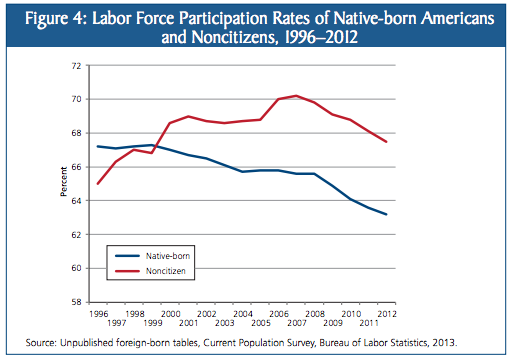
Investors follow this number closely as well. The Jobs Report and unemployment rates are critical measures of an economy’s overall health. Essentially, more people with jobs equates to higher economic output, retail sales, savings and corporate profits. As such, stocks generally rise or fall with good or bad employment reports, as investors digest the potential changes in these areas.
The Consumer Price/ Produce Price Indexes
Additionally, the retail sales report is one of the timeliest as it provides data that is only a few weeks old. Individual retail companies often give their own sales figures around the same time per month, and poor reports from these companies can trigger sell-offs across the entire spectrum as investors fear a stock decrease.
The Bottom Line
There are far more influences on stock holdings than just sales, earnings and debt measures; various changes in the economy can affect portfolios. as well. The smart investor knows to keep an eye on all indicators, economic and otherwise, that can signal a change in the markets. The previous measures are just some of the economic data that can be used to help shape a macroeconomic picture of the economy.